Medically reviewed by Dr. Jesse Dashe, MD, board-certified hand surgeon · Updated September 27, 2026
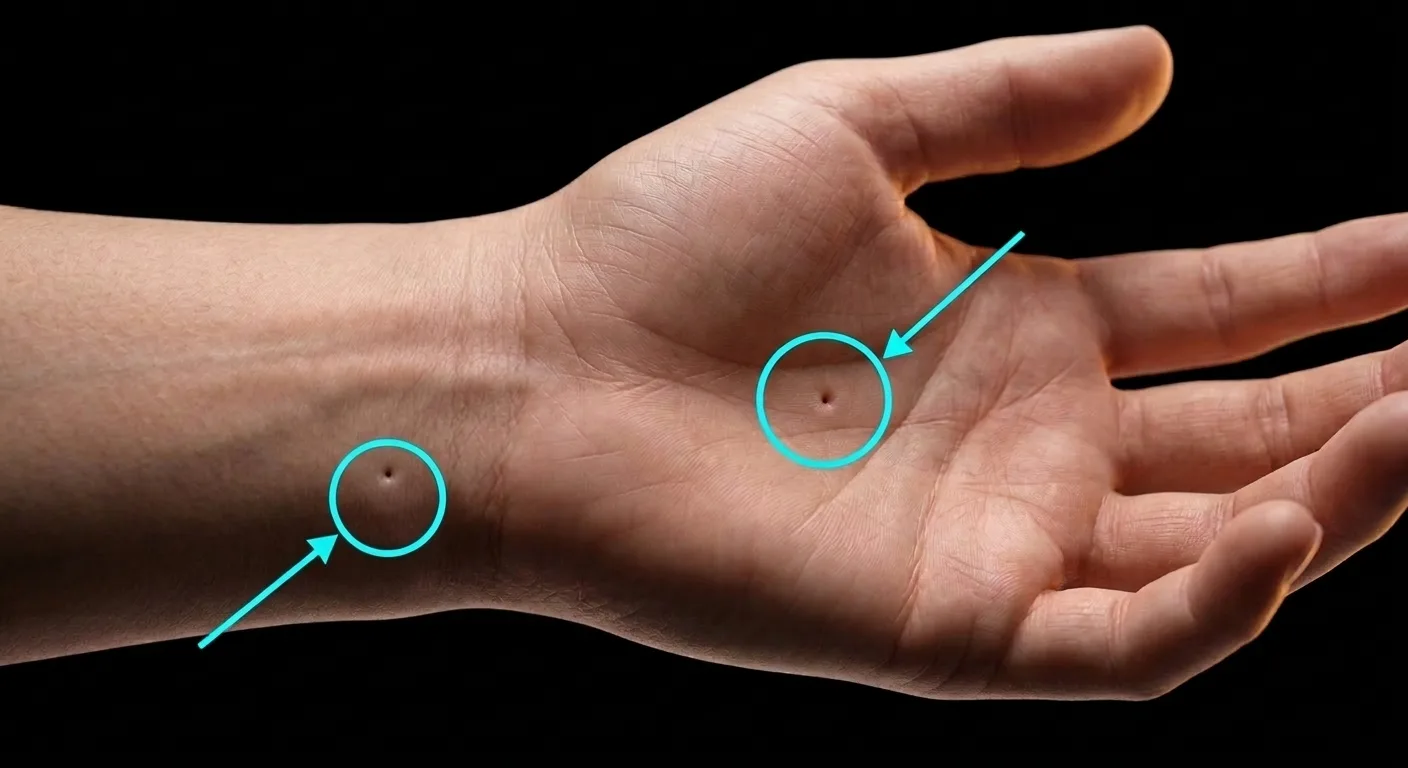
No Scalpel. No Stitches. Two Poke Holes.
A 10–20 minute, in-office procedure using ultrasound-guided thread to release the nerve. Just two poke holes.
Dr. Jesse Dashe performs Thread Carpal Tunnel Release (TCTR), also called threaded carpal tunnel release, ultrasound-guided thread carpal tunnel release, and the Guo Technique, at East Bay Hand Medical Center in San Leandro, serving the San Francisco Bay Area, East Bay, Oakland, San Francisco, Fremont, Pleasanton, Walnut Creek, San Jose, and Northern California.
10-20minutesProcedure time
0incisionsTruly blade-free
95%in 1 weekOffice workers back to work (per Dr. Guo's data)
2poke holesNo stitches
Real patients, on camera
See the poke holes. Watch hands move. Hear patients tell their own stories after Thread Carpal Tunnel Release.
Different hands. Different stories.Watch with sound · 1 minute. These visits range from 6 days to 6 weeks after care. Each clip shows when that visit took place.
These are selected patient stories, not a promised result. Your recovery may differ.
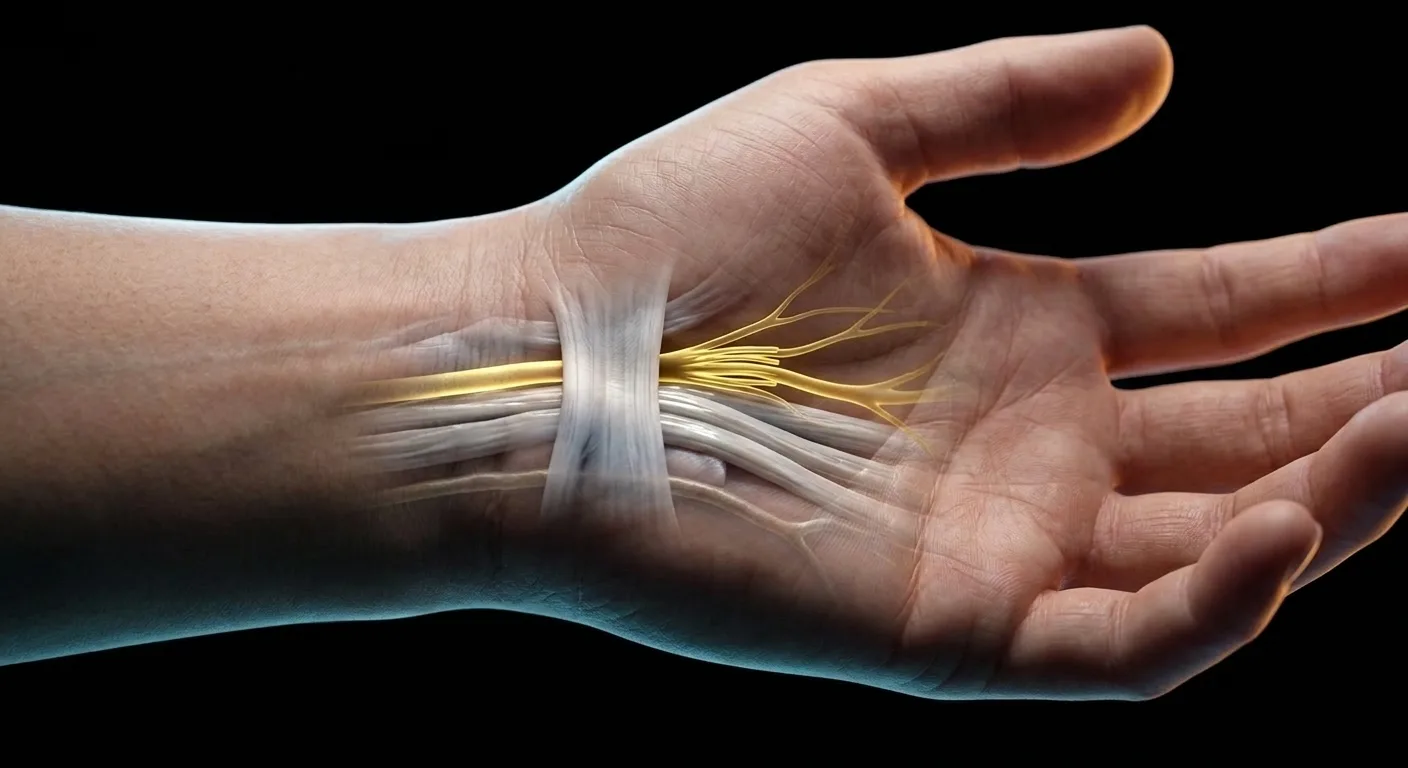
A simple procedure using a needle and thread, guided by ultrasound for precision.
1
Numbing
Local anesthetic is injected in the wrist and palm. You stay awake and comfortable, no IV, no sedation.
2
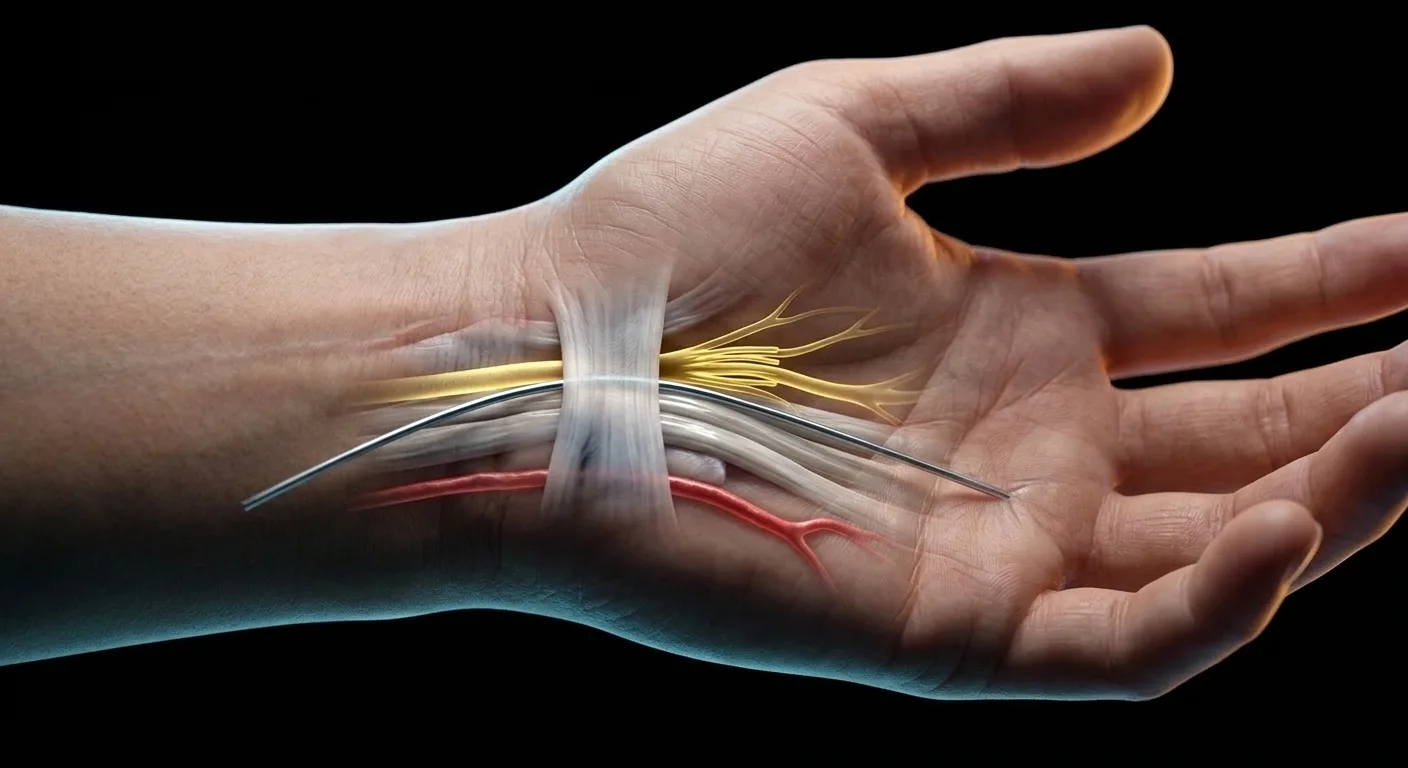
Thread Placement
Using ultrasound to see every structure in real time, Dr. Dashe guides a thin thread beneath and then above the transverse carpal ligament through two tiny needle entry points. No incision is made.
3
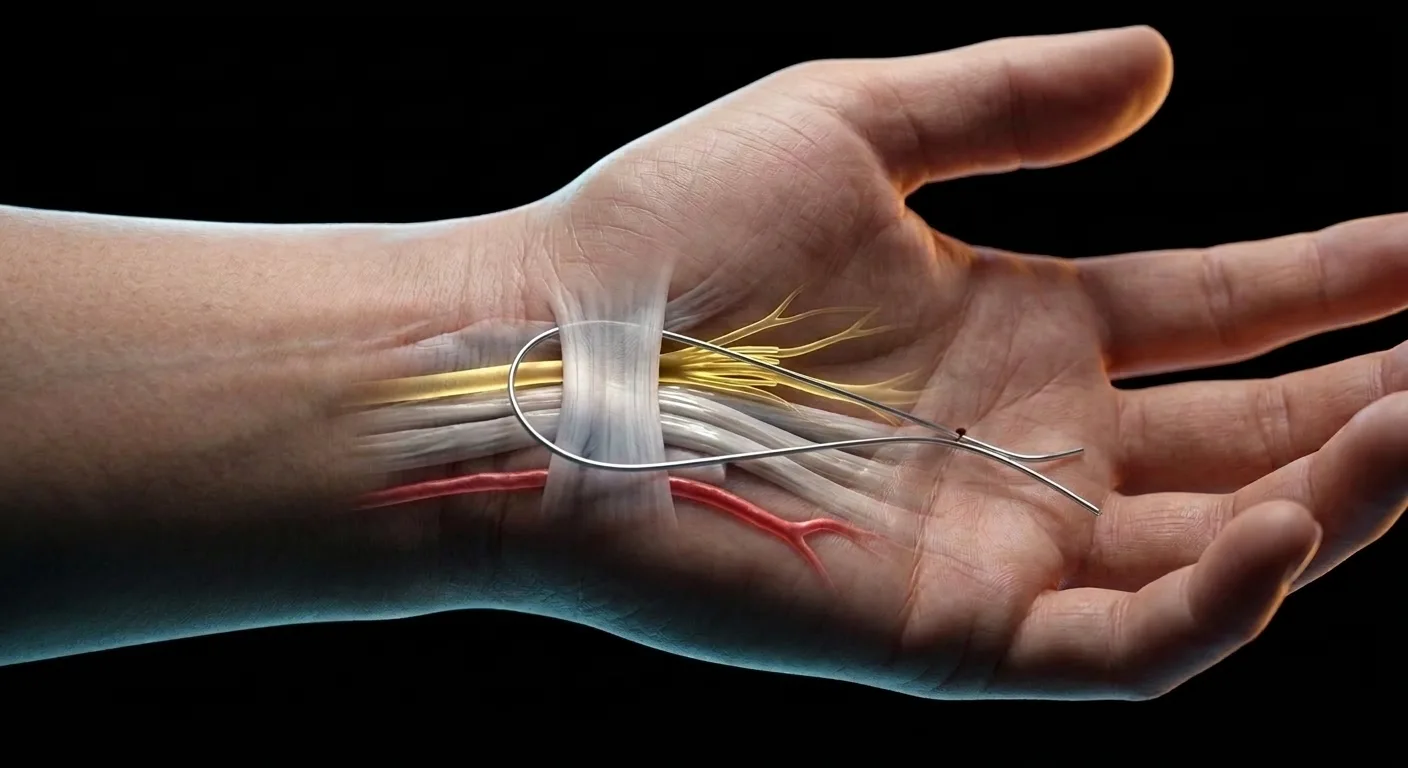
Ligament Release
The smooth thread is gently moved back and forth to divide the ligament, relieving pressure on the median nerve. The ultrasound confirms a complete release in real time.
4
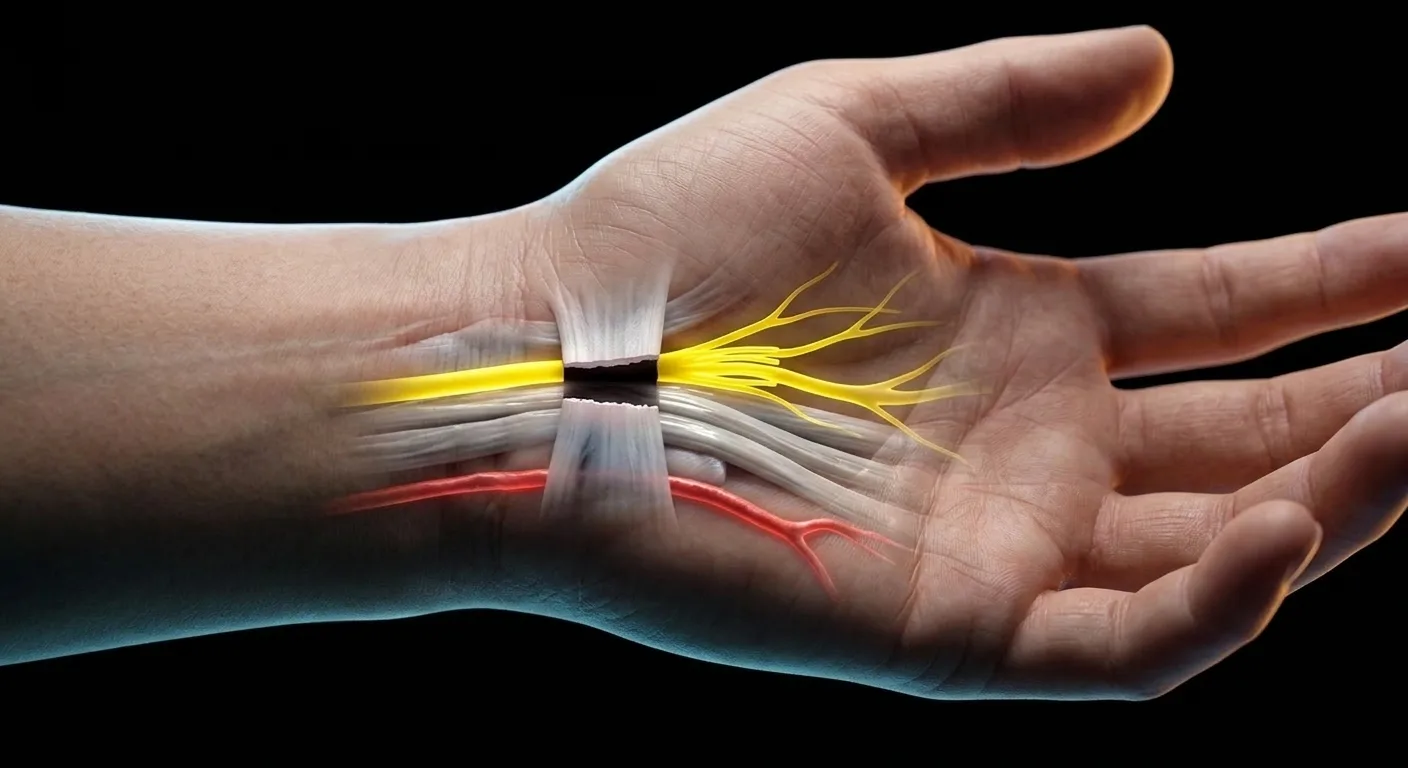
Done, Two Poke Holes
The needle entry points are covered with a soft dressing. No stitches needed. You walk out the same day. Total procedure time: about 10-20 minutes.
Watch the Procedure
See how Thread Carpal Tunnel Release works, from animation to real procedure footage.
Not all carpal tunnel procedures are the same. Here's how they stack up.
Feature
Thread (TCTR)
Open Surgery
Endoscopic
Incision
None (needle only)
2-3 cm cut
1-2 small cuts
Blade / Scalpel
No blade at all
Scalpel
Internal blade
Stitches
None
Yes (removal needed)
Yes
Anesthesia
Local only
Local or sedation
Local or sedation
Return to Work (manual labor)
96% within 2 weeks (per Dr. Guo)
Typically longer
Typically longer
Pillar Pain
Minimal
Common
Less common
Scar
Two poke holes
Visible scar
Small scars
Recovery After Thread Release
Day of procedure: You go home the same day. Move your fingers normally. An initial soft dressing is applied and can be removed in a few days.
Return to work, per Dr. Guo's published outcomes data: 95% of office workers within 1 week, 96% of manual workers within 2 weeks, 93% of heavy laborers within 1 month. Full breakdown in the table below.
No formal physical therapy is needed in most cases.
Pillar pain and scar tenderness, common complaints after traditional surgery, are significantly reduced with the Thread technique.
Return to Work: Dr. Guo's Published Outcomes Data
Dr. Danzhu Guo, who developed the Thread Carpal Tunnel Release technique, has published outcomes data showing the percentage of patients who return to work at each recovery milestone, broken out by work type. Used with Dr. Guo's permission.
Office Work
44% within 24 hours
69% within 3 days
95% within 1 week
100% within 2 weeks
Manual Work
19% within 24 hours
31% within 3 days
96% within 2 weeks
100% within 1 month
Heavy Labor
15% within 24 hours
28% within 3 days
93% within 1 month
100% within 3 months
Source: Dr. Danzhu Guo, developer of the Thread Carpal Tunnel Release technique. Used with permission. Individual recovery times vary; candidacy is determined by physician evaluation.
Is Thread Release Right for You?
Good candidates
Adults with carpal tunnel syndrome confirmed by examination or nerve testing who want to avoid traditional surgery with incisions and stitches. Ideal for patients who need a fast return to work or want to minimize scarring and downtime.
May not be ideal for
Patients with prior wrist surgery at the same site, severe wrist deformity, or certain anatomical variations. Dr. Dashe will evaluate your specific situation with a detailed ultrasound examination.
The Only Thread Release Provider in the Bay Area
Dr. Jesse Dashe is, to our knowledge, the only surgeon in the San Francisco Bay Area offering Thread Carpal Tunnel Release. This procedure is otherwise primarily available at Mayo Clinic and select centers nationally. Patients come from Oakland, San Francisco, Fremont, Hayward, Castro Valley, and beyond.
Thread Carpal Tunnel Release (TCTR) is a minimally invasive, incisionless, in-office procedure that uses a smooth thread guided by ultrasound to release the transverse carpal ligament. No scalpel, blade, or stitches are needed, just two poke holes.
How is Thread Release different from regular carpal tunnel surgery?
Traditional carpal tunnel surgery requires a 2-3 cm incision, stitches, and sedation. Thread Release uses no incision at all, just a needle and thread under ultrasound guidance, performed under local anesthesia in about 10-20 minutes.
Does Thread Release use a blade or scalpel?
No. Thread Release is completely blade-free. A smooth thread is used to divide the transverse carpal ligament under real-time ultrasound guidance, no scalpel, no internal blade, no incision.
How long does the procedure take?
The procedure typically takes about 10-20 minutes. It is performed under local anesthesia, no IV, no sedation.
How soon can I go back to work?
Per Dr. Guo's published outcomes data (used with permission): for office work, 44% of patients return within 24 hours, 69% within 3 days, 95% within 1 week. For manual work, 96% return within 2 weeks. For heavy labor, 93% return within 1 month. Individual recovery times vary; candidacy is determined by physician evaluation.
Will carpal tunnel come back after Thread Release?
Thread Carpal Tunnel Release achieves complete division of the transverse carpal ligament, confirmed by ultrasound in real time during the procedure. Published studies show excellent long-term outcomes.
Does insurance cover Thread Carpal Tunnel Release?
Thread Carpal Tunnel Release is a recognized treatment for carpal tunnel syndrome. Coverage varies by insurance plan. Our office can help verify your benefits before scheduling. Details on our cost and insurance page.
Where can I get Thread Carpal Tunnel Release in the Bay Area?
Dr. Jesse Dashe at East Bay Hand Medical Center in San Leandro is, to our knowledge, the only provider of Thread Carpal Tunnel Release in the San Francisco Bay Area. The procedure is otherwise primarily available at Mayo Clinic and select centers nationally.
Who performs Thread Carpal Tunnel Release in the San Francisco Bay Area?
Dr. Jesse Dashe performs Thread Carpal Tunnel Release (TCTR, also called the Guo Technique) in the San Francisco Bay Area. He is an orthopaedic hand surgeon at East Bay Hand Medical Center in San Leandro, serving patients from the East Bay, Oakland, San Francisco, and Northern California using ultrasound-guided, incisionless thread release of the transverse carpal ligament.
What does recovery look like?
You go home the same day. An initial soft dressing is applied and can be removed in a few days. Move your fingers normally right away. Most patients do not need formal physical therapy. Pillar pain and scar tenderness, common after traditional surgery, are significantly reduced.